
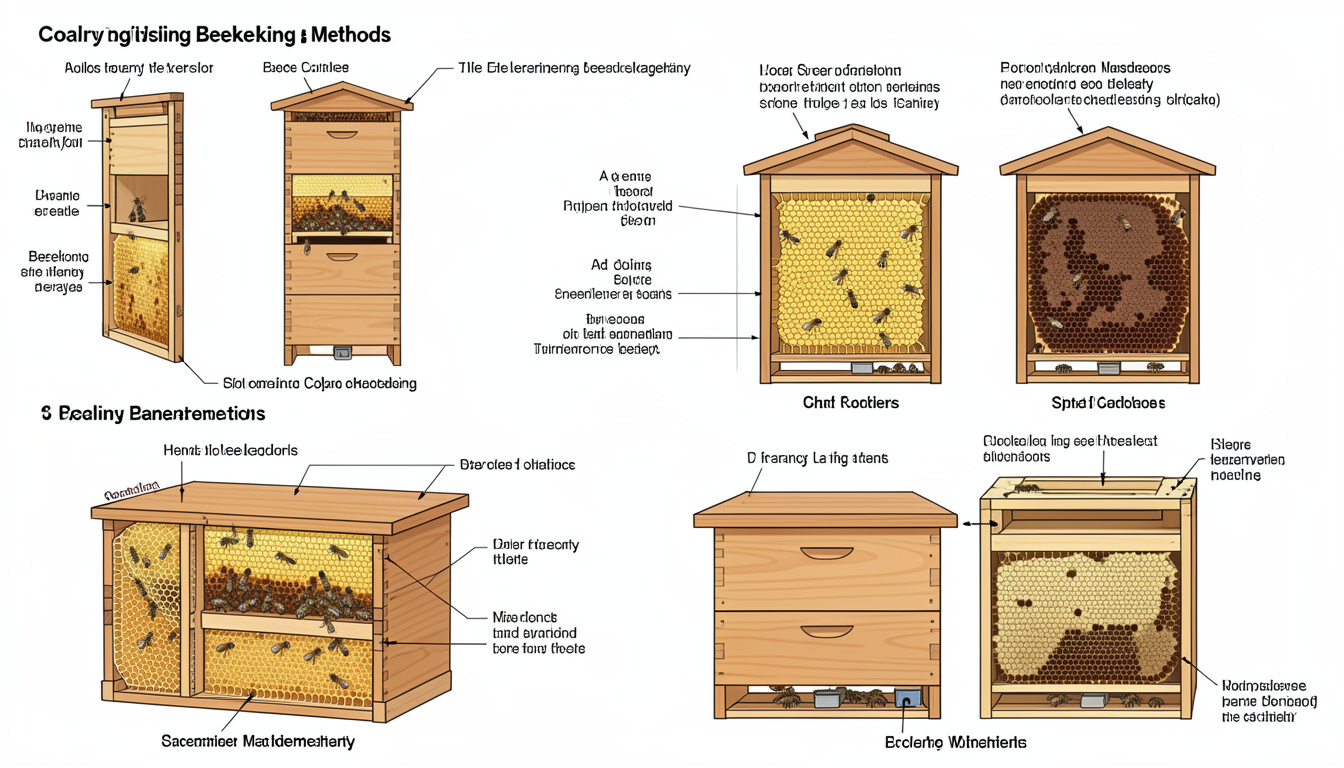
Beekeeping is an age-old practice that has fascinated humans for centuries. From ancient civilizations harvesting honey to modern apiculture practices, the art of keeping bees continues to thrive worldwide. Whether you are a hobbyist looking to start a small backyard hive or an entrepreneur interested in commercial honey production, understanding the different types of beekeeping is crucial. Each type of beekeeping has its unique methods, benefits, and challenges, catering to different environments and goals. In this article, we will explore the various types of beekeeping, their characteristics, and what you need to know before starting.
Traditional Beekeeping
Traditional beekeeping, often referred to as “log hive” or “smoke hive” beekeeping, is one of the oldest forms of beekeeping in the world. This method uses naturally hollowed-out logs, clay pots, or woven baskets as hives. The approach relies heavily on the instincts and behaviors of bees, allowing them to build combs naturally. Beekeepers practicing traditional methods usually harvest honey once or twice a year, using smoke to calm the bees.
Traditional beekeeping is eco-friendly and low-cost, making it ideal for rural areas or regions where modern equipment is not easily accessible. However, it has lower yields compared to modern hives and requires careful management to prevent swarming and disease. It also emphasizes the harmonious relationship between the beekeeper and the bees, focusing on minimal intervention.
Langstroth Beekeeping
Langstroth beekeeping is one of the most widely practiced modern methods. Named after Rev. Lorenzo Langstroth, this type uses movable-frame hives, which allow easy inspection, management, and honey harvesting without destroying the colony. The frames provide bees with a structured environment to build combs efficiently, and beekeepers can manipulate these frames to prevent swarming, control diseases, and increase honey production.
Langstroth hives are popular among commercial beekeepers due to their efficiency and scalability. They are made of wood or plastic and come in various sizes, often with standardized components that make maintenance straightforward. This method requires more initial investment than traditional beekeeping, but it offers higher yields and better control over hive health.
Top-Bar Beekeeping
Top-bar beekeeping is another modern approach that combines simplicity and sustainability. Instead of frames stacked vertically like in Langstroth hives, top-bar hives are horizontal and use bars across the top of the hive where bees build their comb naturally. Beekeepers can remove and inspect each comb individually without disturbing the entire hive.
This method is favored by hobbyists and organic beekeepers because it is gentle on bees and reduces the need for artificial management. Top-bar hives are often easier to construct and maintain than Langstroth hives, and they can be made from inexpensive local materials. Honey yield may be lower, but top-bar beekeeping prioritizes bee health and ecological balance over mass production.
Flow Hive Beekeeping
Flow hives represent one of the most innovative developments in modern beekeeping. Invented in Australia, these hives feature a unique system where honey can be harvested directly from the hive without opening it. Specially designed frames allow honey to flow out into containers by turning a lever, minimizing stress on bees and reducing labor for the beekeeper.
Flow hive beekeeping is appealing to beginners and urban beekeepers because it simplifies honey harvesting and reduces the need for complex tools. However, it comes with a higher upfront cost and still requires regular hive inspections to ensure bee health. Despite these factors, Flow hives have made beekeeping more accessible and appealing to new generations.
Warre Beekeeping
Warre hives, named after Abbé Émile Warré, offer a minimalist approach that closely mimics natural bee habitats. The hive consists of stacked boxes with fixed combs, where the bees manage their own environment with minimal intervention from the beekeeper.
This type of beekeeping focuses on supporting colony health and sustainability rather than maximizing honey yield. Warre hives are known for their natural insulation properties and ability to withstand harsh climates. Beekeepers adopting this method value ecological balance, organic practices, and the health of the bee colony over commercial output.
Urban Beekeeping
Urban beekeeping has gained popularity in cities worldwide. This approach involves keeping bees in small hives on rooftops, balconies, or community gardens. Urban beekeepers often use Langstroth or top-bar hives adapted for limited space.
The benefits of urban beekeeping include increased awareness about pollinators, access to local honey, and support for urban biodiversity. However, it also comes with challenges such as city regulations, limited forage for bees, and managing hive safety in populated areas. Despite these challenges, urban beekeeping fosters a closer connection between people and nature in metropolitan settings.
Commercial Beekeeping
Commercial beekeeping is a large-scale operation focused on maximizing honey production, beeswax, and pollination services. It often involves hundreds or thousands of hives, using Langstroth hives for efficiency and mobility. Commercial beekeepers must manage bee health meticulously, transport hives for pollination contracts, and use technology for monitoring hive conditions.
While profitable, commercial beekeeping is labor-intensive and requires substantial investment in equipment, transportation, and disease management. Beekeepers in this category often collaborate with agricultural industries to provide pollination services, which has a critical role in global food production.
Hobbyist Beekeeping
Hobbyist beekeeping is pursued by individuals who keep bees for personal enjoyment, learning, and local honey production rather than for commercial purposes. Hobbyists often experiment with different types of hives, including top-bar and Langstroth hives, depending on their preferences and space availability.
This type of beekeeping emphasizes education, sustainability, and a closer relationship with nature. It allows beginners to learn bee behavior, hive management, and honey harvesting at a manageable scale. Hobbyist beekeeping is an excellent entry point for anyone interested in the world of bees without committing to large-scale operations.
Organic Beekeeping
Organic beekeeping focuses on maintaining colonies without the use of chemical treatments, pesticides, or synthetic feeds. The approach is highly sustainable and aims to produce pure, chemical-free honey. Organic beekeepers often use top-bar or Warre hives to encourage natural behaviors and minimize stress on the bees.
Certification for organic honey may involve strict regulations regarding hive management, forage sources, and treatment methods. While yields may be lower than conventional methods, organic beekeeping appeals to environmentally conscious consumers and promotes the overall health of pollinator populations.
Conclusion
Beekeeping is a diverse and multifaceted practice with options suitable for every type of beekeeper, from hobbyists to commercial operators. Traditional, Langstroth, top-bar, Flow, Warre, urban, commercial, hobbyist, and organic beekeeping all offer unique experiences, challenges, and benefits. Understanding these types is crucial for selecting the right approach based on your goals, resources, and commitment level. Whether you are driven by passion, sustainability, or profit, there is a type of beekeeping that fits your lifestyle while supporting the vital role bees play in our ecosystem.
Frequently Asked Questions
What type of beekeeping is best for beginners?
Top-bar and Langstroth beekeeping are considered ideal for beginners due to ease of hive management, simple inspection methods, and available guidance.
Which type of beekeeping produces the most honey?
Commercial beekeeping using Langstroth hives generally yields the highest honey production due to efficient hive management and large-scale operations.
Is urban beekeeping safe for neighbors?
Yes, with proper hive placement, bee-friendly plants, and protective barriers, urban beekeeping can be safe and beneficial for local biodiversity.
What is the most natural form of beekeeping?
Traditional and Warre beekeeping mimic natural bee habitats and encourage minimal intervention, making them the most natural forms.
Can I switch from one type of beekeeping to another?
Yes, many beekeepers experiment with multiple hive types. Transitioning may require adjustments in hive management, space, and tools depending on the method chosen.